
Temecula Neighbors and the Block Record
A block-level question has no single public list. The useful sources are layered. Riverside GIS gives a parcel shape and nearby land context. The assessor counter can expose ownership by address or APN, while the recorder traces named transactions. Voter information follows a separate California access rule. Neighborhood Watch offers civic onboarding, and the GIS HOA layer shows geography without a member roster.
| Source | What It Shows About a Block | Access |
|---|---|---|
| Riverside Map My County and city GIS | Parcel polygons, addresses, adjacent lots, boundaries, zoning, hazards, and selected nearby parcels | Free viewer, pan, zoom, identify, and documented radius workflows |
| Riverside ACR assessor roll | Owner and mailing information tied to a nearby APN or address | Public inspection at an ACR office; owner names suppressed online |
| Riverside recorder index | Named conveyances, liens, releases, and recording dates | Web name index from 1974; older work through ACR and Gateway |
| California voter file | Registered-voter address, district, status, and participation fields when lawfully obtained | Approved purpose only; no casual street browse |
| Neighborhood Watch | Civic contact and block-group onboarding | Free program; no published participant roster |
| GIS HOA layer | Association geography and mapped boundaries | Map context only; no verified member directory |
Owners, occupants, and neighbors are not synonyms. An owner may receive tax mail at another address. A parcel may have a non-owner occupant or several household members. A permit applicant or contractor may be connected to a project without living there. The block record is strongest when each source is labeled with the fact it can actually prove.
Map Temecula Neighbors From One Address
Use Riverside Map My County for the parcel view, then apply the city GIS workflow that documents address, APN, tract-and-lot, street-intersection, and radius or area tools. The exact handoff is address or APN, selected parcel or area, radius, nearby parcel set, then parcel report or CSV mailing labels. It is an adjacent-owner workflow, not a household directory.
- Search the starting address or APN and confirm the selected parcel, situs address, and nearby streets.
- Designate the parcel or area, choose a radius, and review the parcels captured around the starting point.
- Pan and click adjacent polygons to check the visual block, tract, parcel, and boundary context.
- Run
ParcelReportWorkflowfor parcel detail orCsvMailingLabelsfor the documented owner mailing-label output. - Confirm the owner date and address at the ACR office before treating a selected parcel as a current ownership clue.
The mailing-label workflow returns owners’ mailing addresses. It does not identify occupants, household members, or delivery customers. For a whole named street, the Temecula street records walkthrough handles the wider address chain.
Temecula Neighbor Parcel Reports
The city GIS configuration names several useful actions: SearchByAddress, SearchByApn, SearchByOwner, SearchByTractAndLot, ParcelReportWorkflow, and CsvMailingLabels. Those names make the block method concrete. They also show why an APN can bridge a street label to a land record when the wording of an address changes.
Map layers can include parcels, county parcels, addresses, HOA geography, zoning, general plan, tract and parcel maps, city boundary, sphere, council district, schools, parks, maintained streets, and hazard layers. County and assessor data are updated but supplied without survey warranty. A polygon is a research aid, not a legal boundary survey.
A parcel report can help organize a radius inquiry, but it should be paired with the ACR ownership counter and the recorder name index. The recorder is not a reliable starting point for a street search. Its useful role begins after an owner or other party name is known.
Temecula Neighbor Notice Radius
Temecula conditional-use instructions give a real example of how an adjacent-owner list can be built for a public notice. The example is useful because it states the map and certification work, while also showing that the assessor does not create or certify the list for the applicant.
| Notice element | Documented requirement or limit |
|---|---|
| Radius map | Prepare an assessor parcel map for every parcel inside the notice radius. |
| Owner names | List the owners shown for the parcels on the map. |
| 600-foot example | At least 30 different owners are required even when a 600-foot radius is used. |
| Mailing materials | Prepare two label sets and the related notice materials. |
| Certification | A title professional provides certification; the assessor will not create or certify the list. |
This is a planning-notice standard, not permission to publish a block directory. It demonstrates a lawful, purpose-bound owner list. It does not turn the list into proof of occupancy, and it does not open voter, utility, delivery, or protected address data.
Owner, Occupant, and Temecula Neighbor
The assessor roll is about taxable ownership at a roll date. A mailing address is where tax correspondence goes. The situs address is the physical property. An occupant is a person present at the property, but public parcel sources do not establish every person who lives there. A neighbor may mean an adjacent owner, an adjacent household, or a person met through a civic group. The word needs a source behind it.
- Owner
- The person or entity shown by the permitted ACR ownership inspection for the parcel and roll date.
- Mailing address
- The delivery address attached to tax or owner correspondence, which may differ from the situs.
- Situs address
- The physical address assigned to the parcel or property.
- Occupant
- A person using or living at a property, a fact not supplied by an owner mailing label alone.
Permits add the same caution. An applicant, contractor, owner representative, complaint party, or inspector can appear in an address file without being the person at the property. Treat those names as project evidence and then seek a separate, lawful source if a personal identity question remains.
Temecula Voter Records for Neighbors
California My Voter Status is a self-service check. A person supplies personal details to view registration status, party preference, polling place, vote-by-mail status, and election information. It is not an open name directory and cannot be used to browse a Temecula block.
The statewide voter file is available only for authorized election, government, scholarly, journalistic, or political purposes under Elections Code sections 2188 and 2194 and California Code of Regulations, title 2, sections 19001-19013. A statewide file costs $100. A specific-voter request costs $30 per record up to $100 and is limited to ten named voters per application, while Riverside County fees may differ.
An application identifies the applicant and beneficiaries, the requested file or named voters, the lawful purpose, agents or vendors, security controls, and declarations with wet signatures. Submission is by person, mail, or courier with current federal or state photo ID and the fee, not by email or fax. The file can include residence and mailing address, registration status, districts, and participation history, but participation never shows ballot choices.
Personal or private communications, solicitation, unauthorized opinion surveys, and harassment are prohibited uses. Safe at Home voters are handled through a confidential registration card and a separate phone route. A voter record can support an authorized election task; it is not a casual neighbor lookup.
Temecula Neighborhood Watch for Neighbors
Temecula Neighborhood Watch supplies a community-contact layer without posting a participant list. The program is free and has no minimum attendance. A group can meet at a home, an HOA common area, a cafe, or outdoors. Contact is available at tcc.management@temeculaca.gov or through City Hall addressed to Fire/TCC. The Temecula Citizen Corps, Riverside County Sheriff, and the city administer the program.
This route answers a different question from a parcel search. It helps people organize a block group, learn how to report concerns, and build a lawful civic connection. It does not certify who lives at an address, and no official participant roster is published.
The official Neighborhood Watch instructions show the onboarding route.
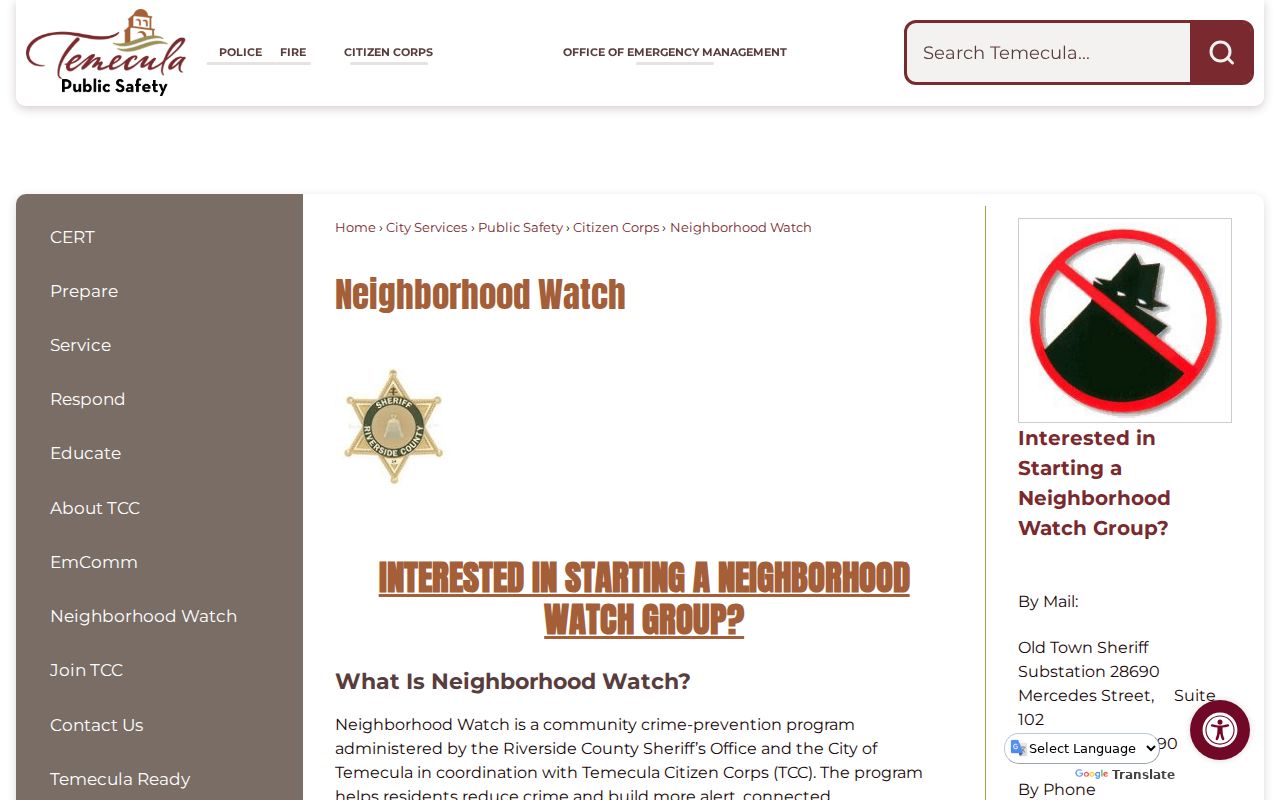
The screenshot belongs to a civic program, not a private resident list. It is the safer way to turn a block question into a real community contact.
Temecula HOA Geography for Neighbors
Riverside and city GIS layers can show HOA geography alongside parcels, tracts, zoning, roads, and city boundaries. That can help explain why a block is grouped under a planned area or association boundary. It does not prove membership, dues, contact details, or the people in a household.
No authoritative, comprehensive Temecula HOA or neighborhood-association inventory with a public resident or member directory was verified. Do not fill that gap with an assumed roster. Use the map for geography, ask a known association through its lawful public channel when appropriate, and keep any answer tied to the association’s own records.
Neighborhood Watch is the documented public civic program. The HOA layer is a map layer. Keeping those roles separate prevents a geographic boundary from becoming an unsupported identity claim.
Temecula Neighbor Rolls Versus Categories
Official sources are narrow but traceable. Commercial neighbor-category tools may combine owner data, public records, and purchased data into a broad profile. They can carry stale addresses, merged identities, unclear dates, and fees without becoming an official Riverside or California record. The comparison below is about source quality, not a recommendation of any service.
| Source category | Useful block clue | Limit |
|---|---|---|
| Official GIS and parcel records | APN, parcel shape, selected radius, owner route, mailing-label workflow | Owner and parcel context do not prove occupants or household members. |
| Official recorder and voter systems | Named conveyances or lawfully obtained election fields | Recorder is name keyed; voter access is purpose restricted. |
| Commercial neighbor categories | Possible combined public and purchased-data clue | May be stale, merged, paid, and hard to verify against a custodian. |
The California DROP deletion platform gives residents a current way to request deletion from registered data brokers.
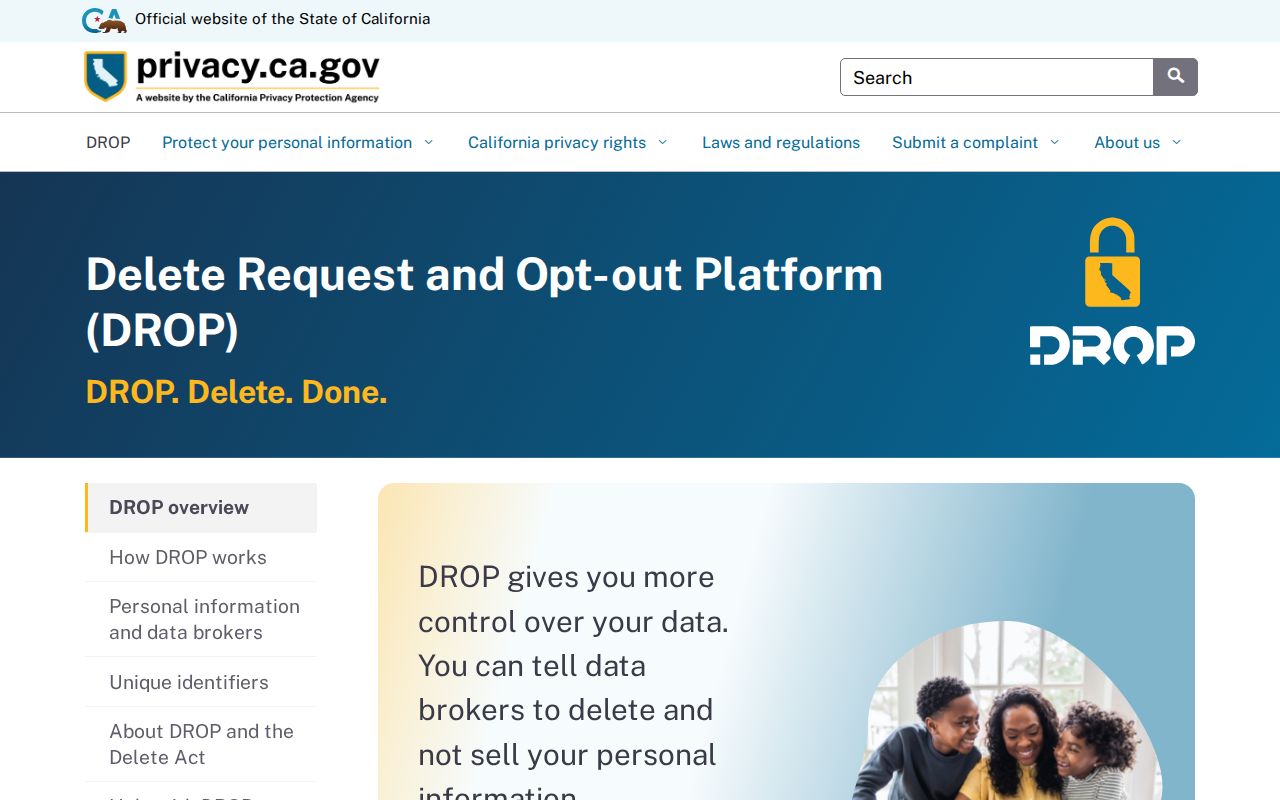
DROP is a privacy tool, not a parcel search. It shows why a commercial category should not be treated as a complete or fixed account of a neighbor.
The California DROP explainer describes the one-request process and the broker matching model.
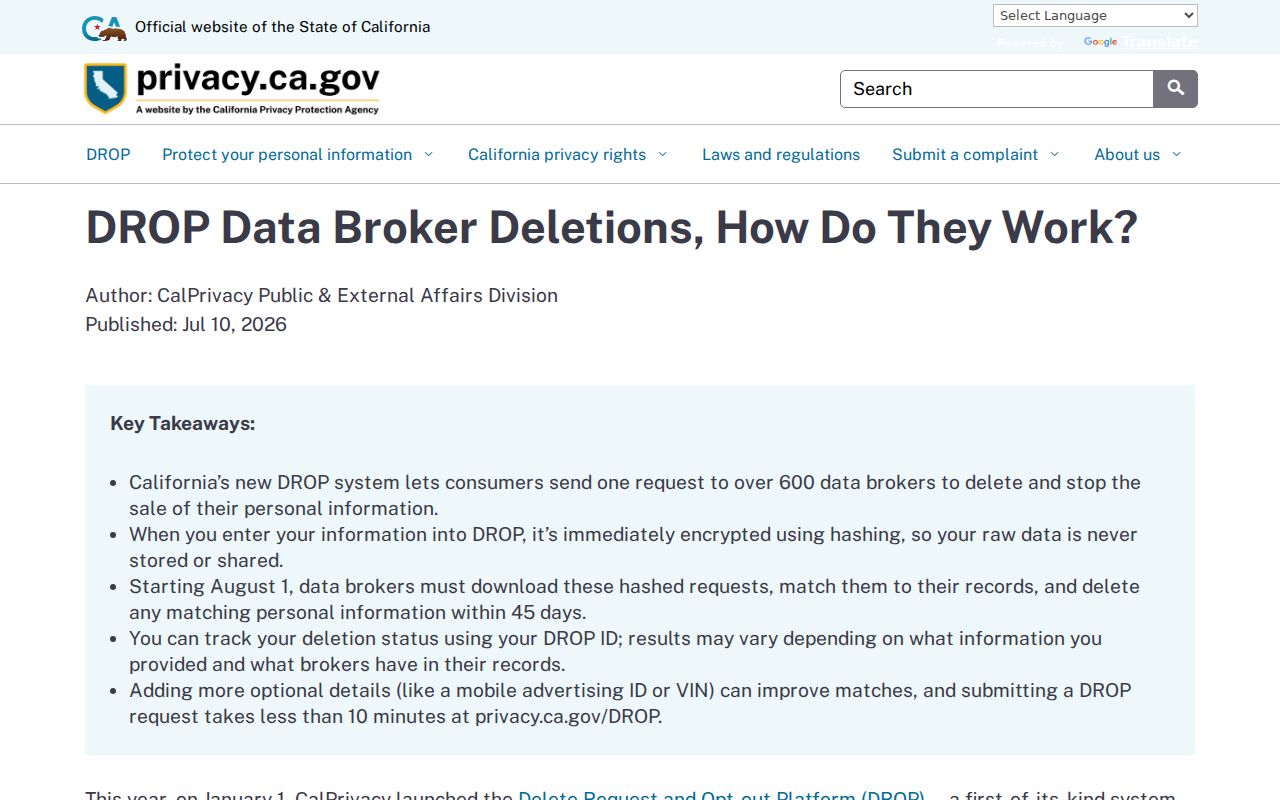
As of the documented 2026 rollout, one request reaches more than 600 registered brokers; the process is separate from public government records that remain with their custodian.
Privacy Limits on a Temecula Neighbor Lookup
Household members, non-owner occupants, utility and delivery customers, DMV addresses, and voter data outside approved use remain outside a casual block search. California’s Safe at Home program gives qualifying victims and survivors a substitute address, mail forwarding, confidential voter registration, and related protections. Agencies and courts accept the substitute address, but private companies are not universally required to do so, and the program does not erase old disclosures.
Read the California Secretary of State Safe at Home program before treating a public address as complete.
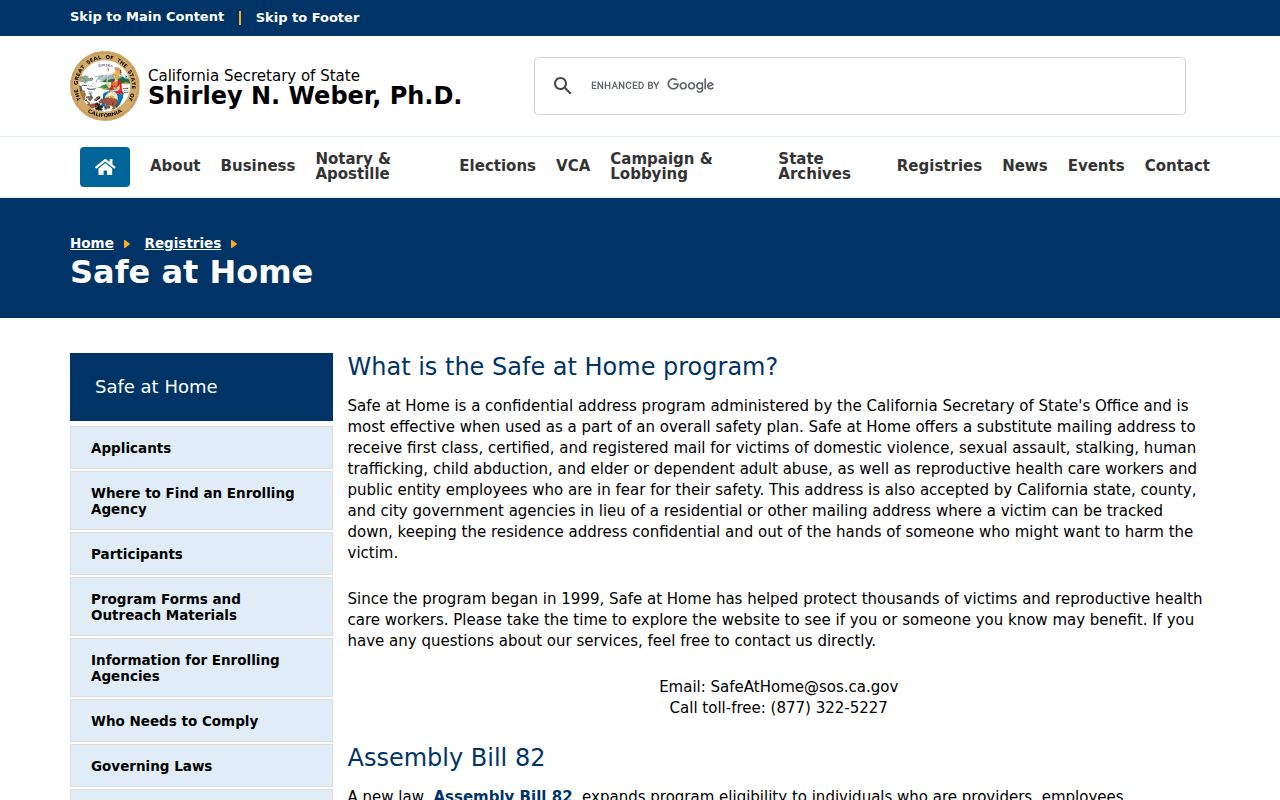
The program’s substitute address can change what appears in a voter or agency record. An older disclosure may still exist, so a blank or alternate address should not be treated as proof that a person left.
The California Attorney General Safe at Home guidance explains nondisclosure protections and the limits of online publication.
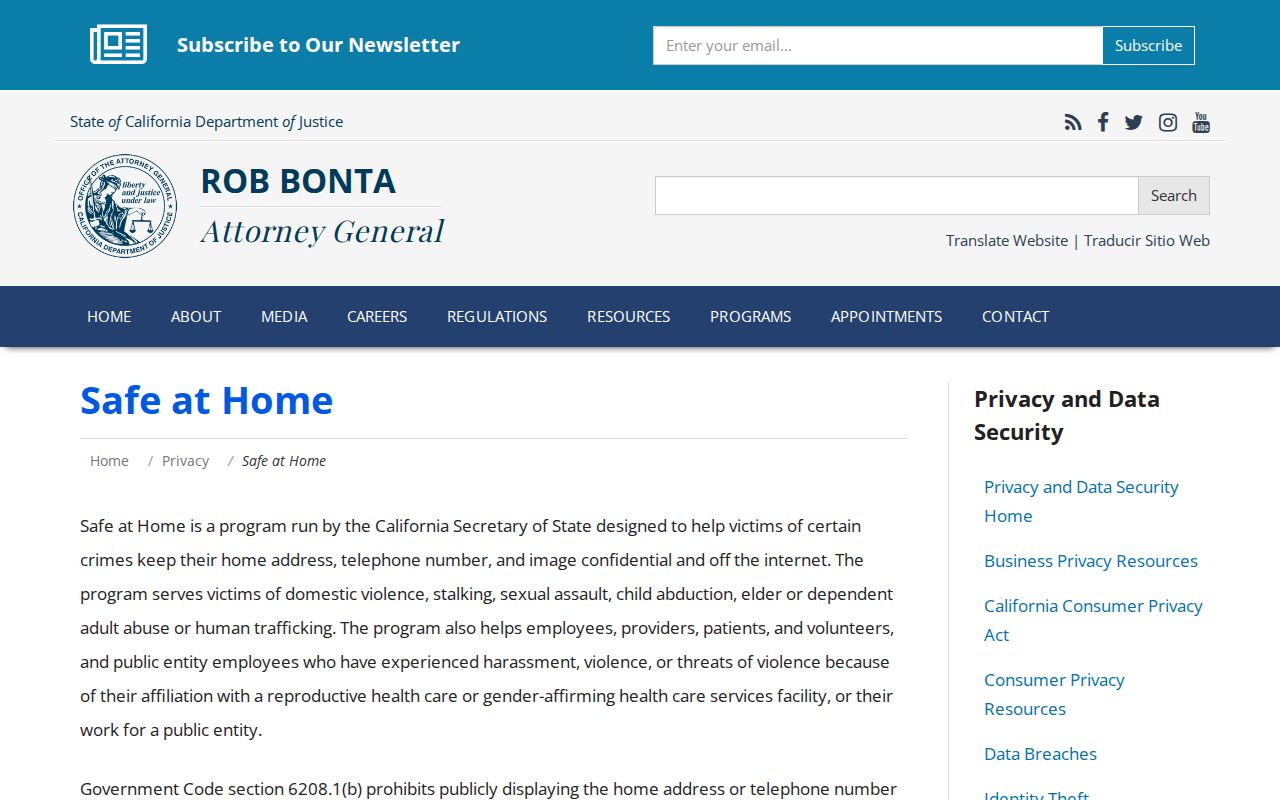
Government Code section 6208.1 restricts online publication of a participant’s address, phone, or image after the required demand, while section 6209.5 permits a substitute mailing address in specified property documents even when a legal description can still reveal a location.
Lawful use. Use a Temecula neighbor lookup for personal safety awareness, civic connection, and ordinary block curiosity. Do not use names, maps, or mailing labels to stalk, harass, intimidate, or harm another person.